2026 Annual Report

Introduction
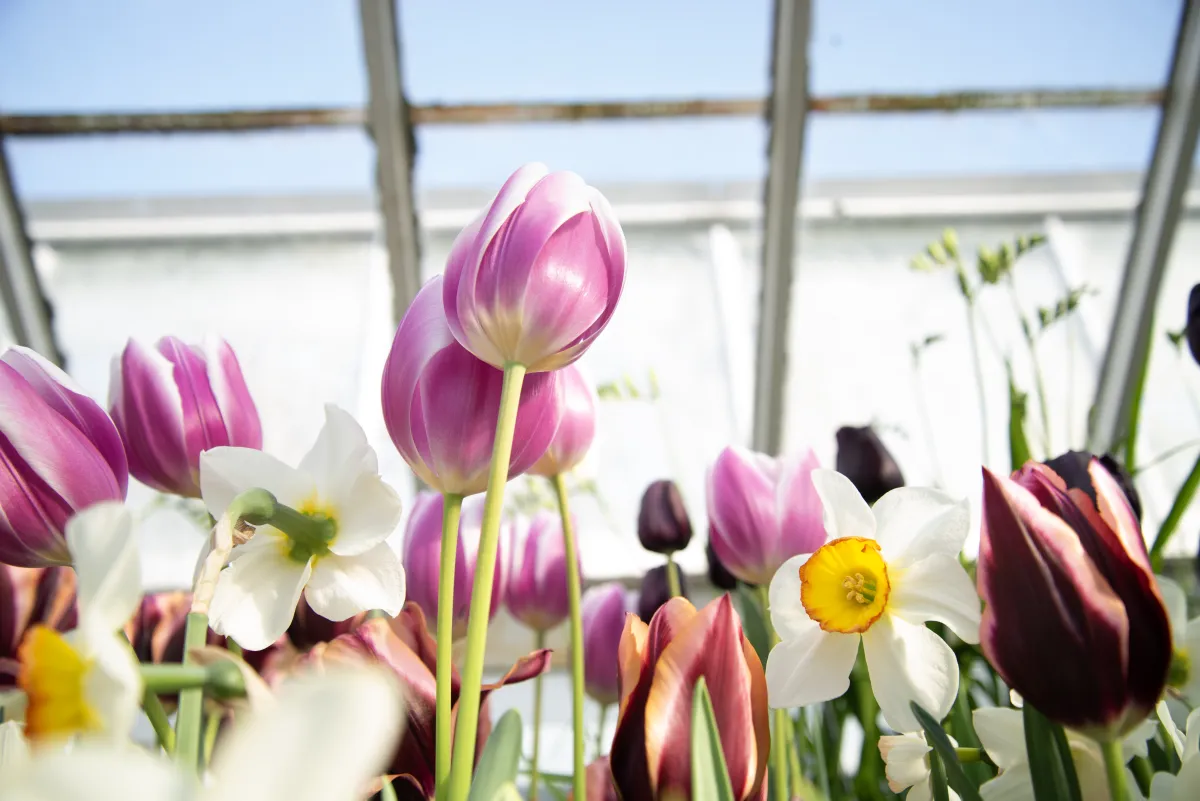
With the launch of the new strategic plan, Compass 2035, Smith College has answered the question: What matters most right now? This guiding document articulates a vision centered on academic excellence and discovery; student leadership opportunities and careers; well-being and belonging; and sustainability in all its dimensions. These priorities naturally resonate with the mission of the Botanic Garden of Smith College. In many ways, the work unfolding across the garden already reflects these aspirations.
Our living collections remain one of the college’s most distinctive academic resources. Numerous accreditations affirm their significance, but their real power lies in how richly they are used across the campus. In the spaces of the botanic garden, students encounter plants and ideas in ways that expand the boundaries of the classroom.
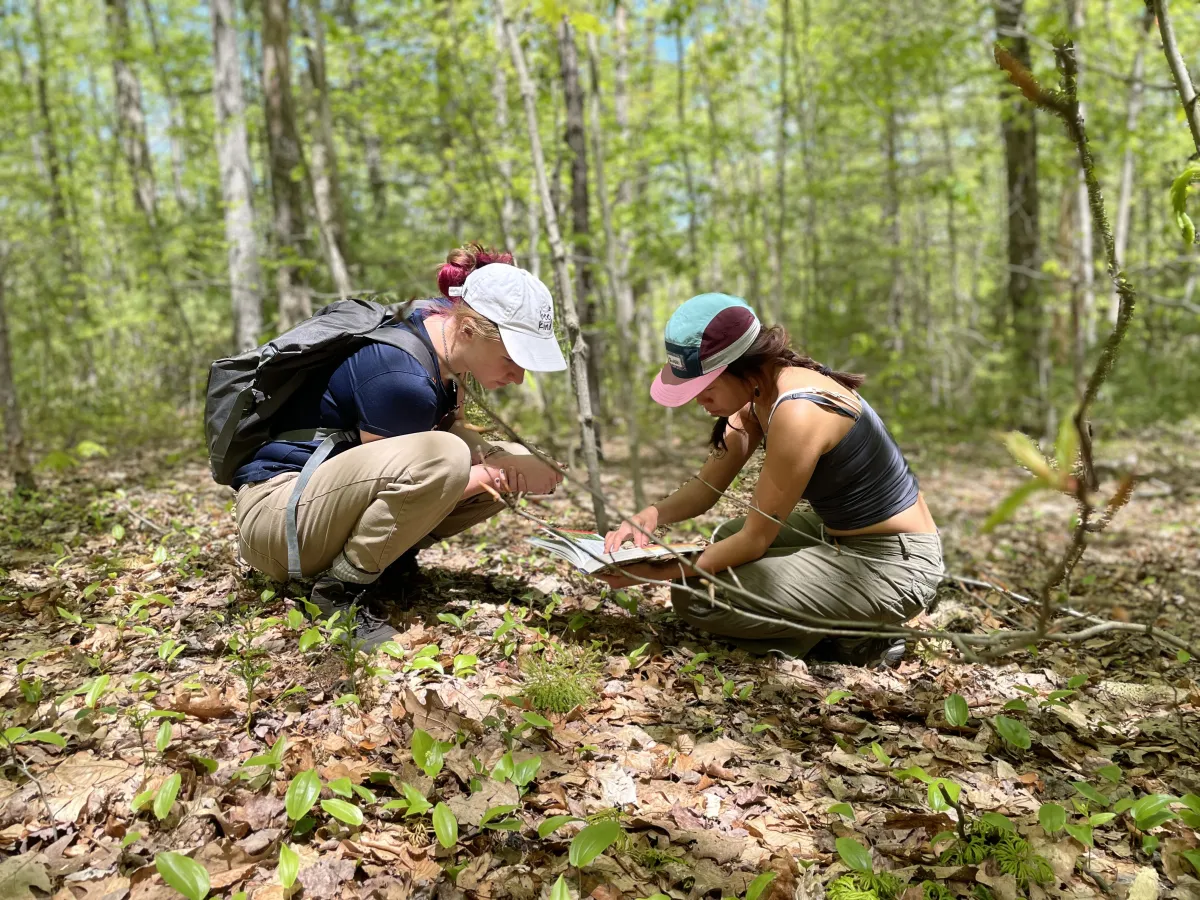
Students are central contributors to the garden’s work. Smithies are invited to join our team as horticulturists, interns, educators, and researchers. Some of their efforts have an immediate impact here on campus. Others reach far beyond it, contributing to plant conservation initiatives with global reach. It is one of the quiet strengths of a college botanic garden that meaningful learning and meaningful conservation can unfold together. And it is in line with our guiding mission.
The Botanic Garden of Smith College fosters environmental and social justice through teaching and learning about plants, people, and place. We do this by:
- Curating plant collections that tell stories of plant and human diversity
- Preparing students to become informed, capable leaders and change agents
- Supporting faculty in developing integrative, student-centered learning
- Welcoming visitors to explore, learn, and contribute their knowledge
- Cultivating landscapes that foster creativity, reflection, and well-being
We are able to do this work because of the staff that makes up our team. The garden is supported by 14.75 staff. Our work spans education, public engagement, conservation, wellness, and the care of nearly 5,000 species of plants from across the globe. But it is our emphasis on relationships—with students, faculty, staff, and our broader community—that truly defines the botanic garden.
We are supported by a fierce group of alums who support our work through their roles in the Friends Leadership Council. With their guidance, we are continuously connecting with Smith alums, our greater community, strengthening the network for our current students to join.
Assessment
We see our successes in both the breadth and depth of our engagement with students, faculty, and the broader community. The breadth is reflected in the data shared in the "Engagement Statistics" section—showing both the volume of student engagement and the myriad starting points for inquiry. We hear the impact of these experiences reflected in testimonials from students who felt a sense of belonging in our spaces, interns who discovered new career paths, and alumnae whose experiences with us shaped their understanding of the world and their place in it. We also see success in the impact of our conservation initiatives, which are multidimensional and student centered, focused on both ecological and cultural stories, and are regionally focused yet globally connected.
Programming
Inaugural Alum Panel
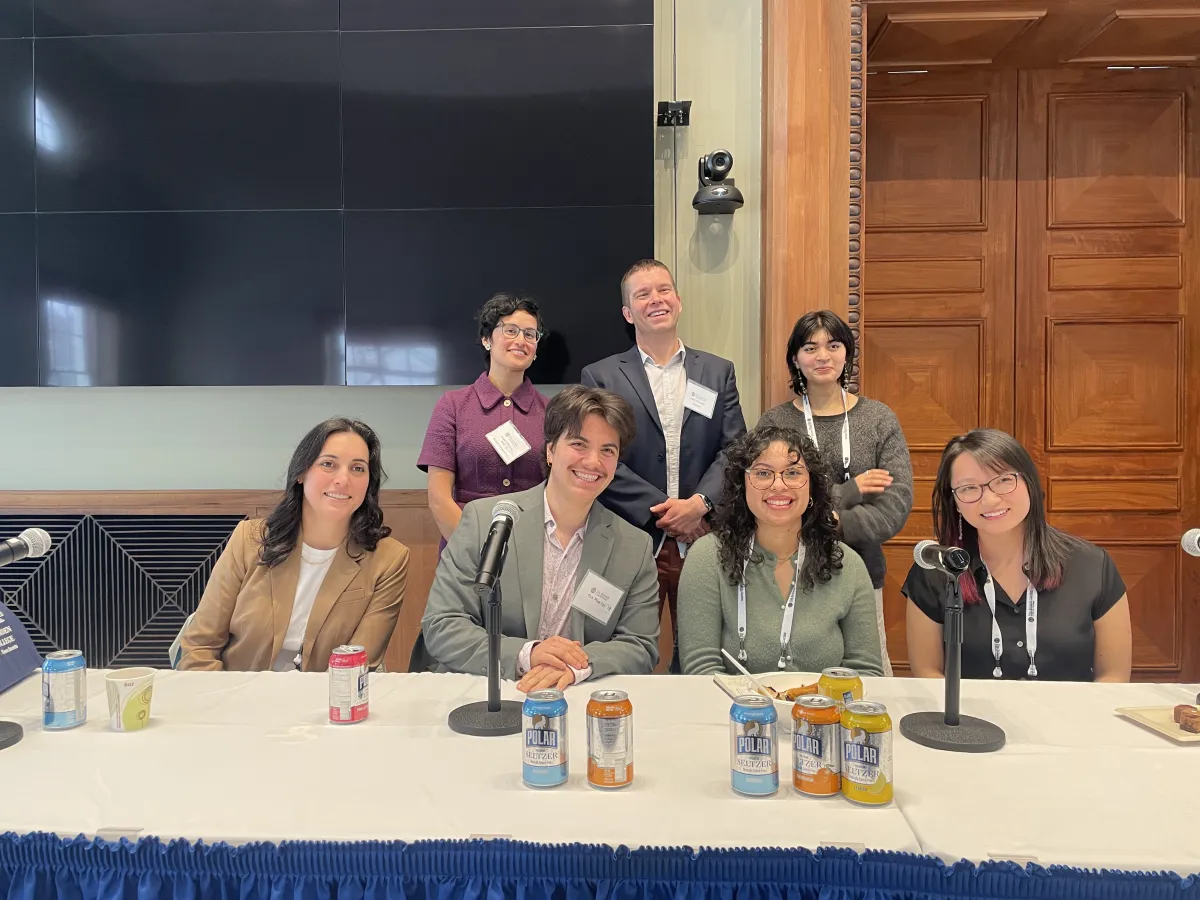
The idea for an alum panel initially came out of a listening session Manager of Engagement Anjali D’Souza had with Smith students in April 2025, where students wanted to understand how the botanic garden experience had shaped the aspirations and paths of alums who had stood in their shoes. On May 6, 2026, four alums traveled to campus to participate in a panel and luncheon hosted by the botanic garden in partnership with Alum Relations and the Lazarus Center for Career Development. Alex Julius ’09, Taz Mueller ’18, Jamila dePeiza-Kern ’22, and Allie Wornell ’25 joined us as our panelists for an informative conversation on their current work and their reflections on their time as botanic garden interns, student workers and/or researchers. The panel was open to the entire Smith College student community.
The event was not only an opportunity for students to connect with alums, but also an opportunity for our partners across the campus to see the work that we do in such diverse fields—state environmental policy, equity in arboriculture practice and curriculum, urban policy, and public horticulture specifically. Students made strong connections and have continued correspondence with alums on the panel and in the audience. This effort grows out of a key goal in our Racial Justice Action Plan: sustain relationships with our graduates/interns of color and offer career guidance to encourage them to develop competencies that will make them strong candidates for future hires in the field. By staying connected, making introductions, and expanding professional networks one relationship at a time, we can help create meaningful, lasting change in fields that desperately need the strength and diversity of Smith voices.
I've had the opportunity to return to campus a number of times since graduating, but never specifically to celebrate my time at the botanic garden. Though my time at Smith was tied to the broader campus, my personal ties, relationships, and core experiences are directly linked to the botanic garden. I appreciated the opportunity to share that even though the garden was treated as elective, specializations for biology majors, a way to escape the stress of academic pressures, or a warm reprieve from the cold, I saw the garden as an open door for my career. I hope that by sharing my experiences with the garden and how it has impacted my career trajectory, other students will see the garden as formative to their time at Smith, as I did.

Koanbanchinemma Exhibit
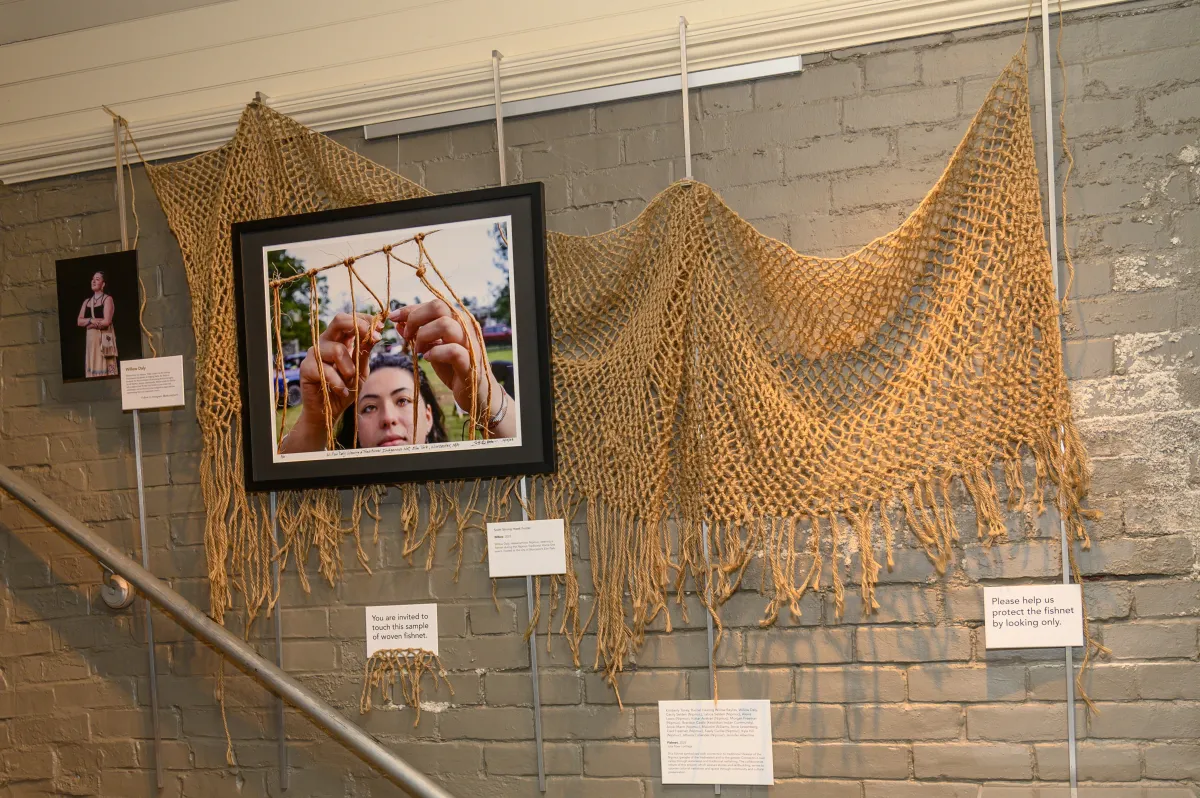
The exhibitions we develop at the botanic garden provide an opportunity to engage with rich and varied themes. We intend for each exhibition to reflect and engage with questions brought forward by the liberal arts. As our process has steadily shifted toward utilizing exhibitions as opportunities for experiential learning and as tools for relationship building within our campus and local communities, we were thrilled to welcome our fall exhibition, Koanbanchinemma (do you see the light (in me)) to the Church Gallery in Lyman Plant House. Featuring the works, art, and knowledge of six Nipmuc artists, cultural and land stewards, Koanbanchinemma calls for a heightened awareness of the ways in which Indigenous knowledge systems can awaken our senses, our understanding, and our collective responsibility to care for the natural world.
This exhibition grew out of relationships between Nipmuc community members, artists, and the people at Smith who have been working to reimagine what it means to care for this land. Many of the artists in this show have longstanding friendships or working relationships with faculty and staff at the garden. Over time, those relationships deepened through shared conversations about place, stewardship, and the pedagogies of care. Out of that came a shared intention: to create space where Indigenous knowledge and creativity are not only included, but allowed to lead.
Koanbanchinemma, which translates as “do you see the light (in me),” invites that kind of seeing. It’s about the ways light connects us: how it nourishes the plants around us, how it awakens memory, and how it can illuminate new ways of relating to place and to one another. And through this exhibition we’ve focused on the work of Indigenizing this space.

BoGSEs Throughout the Year
The Botanic Garden Student Educator (BoGSE) program gets students working alongside botanic garden staff as collaborators and co-creators, while simultaneously providing a pathway for them to further develop their own botanical knowledge, communication and leadership skills. The community they develop over the year extends beyond the walls of Lyman, as BoGSEs share their enthusiasm for the botanic garden with other Smithies and live out our mission in the process.
This year, our cohort of four BoGSEs, led by our education intern, activated a range of educational initiatives. With the support of our engagement intern, they partnered with over 20 campus groups—from departments to houses, and Unity orgs to athletics teams—leading and co-leading programming that connected students with the botanic garden.
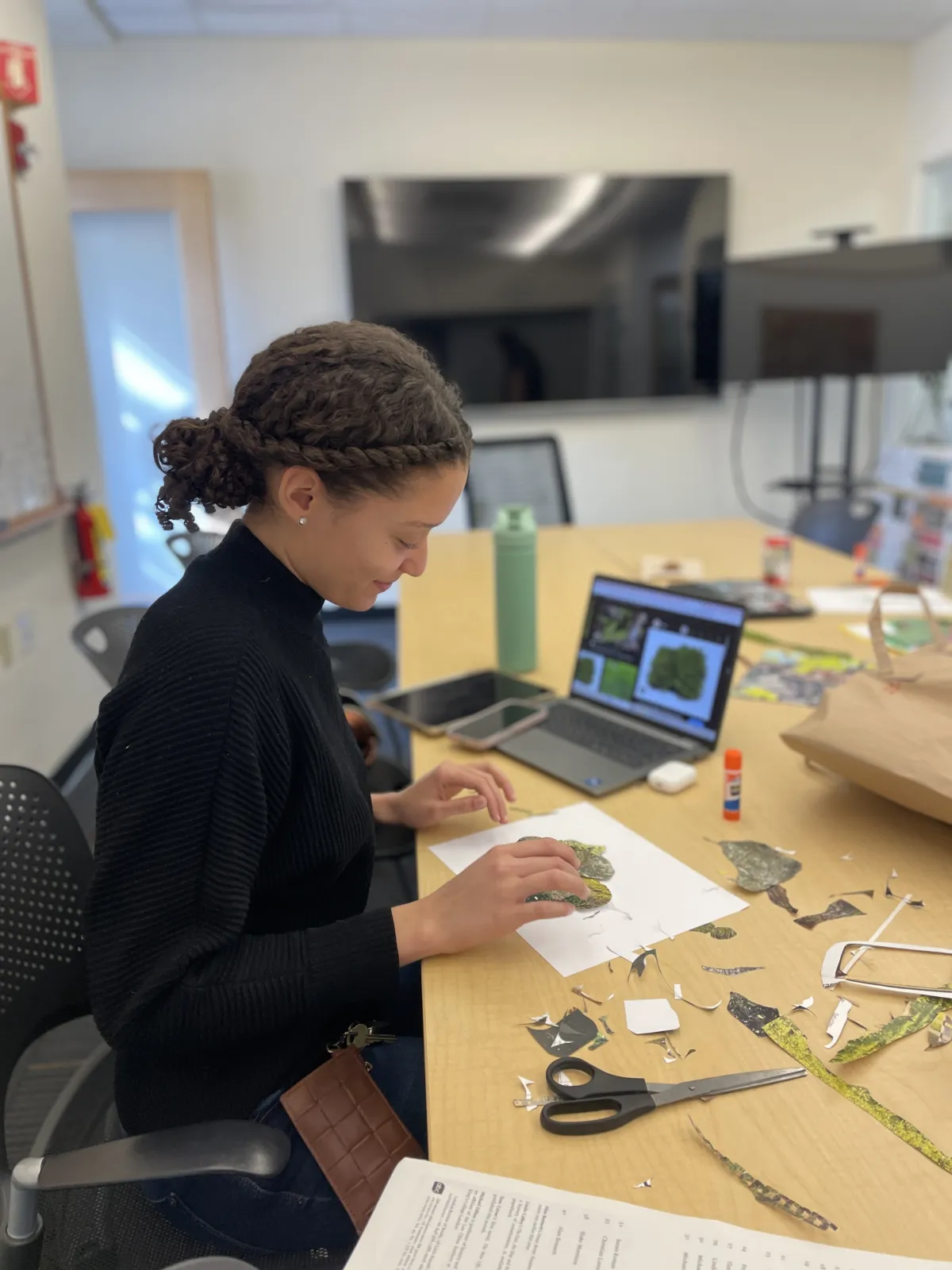
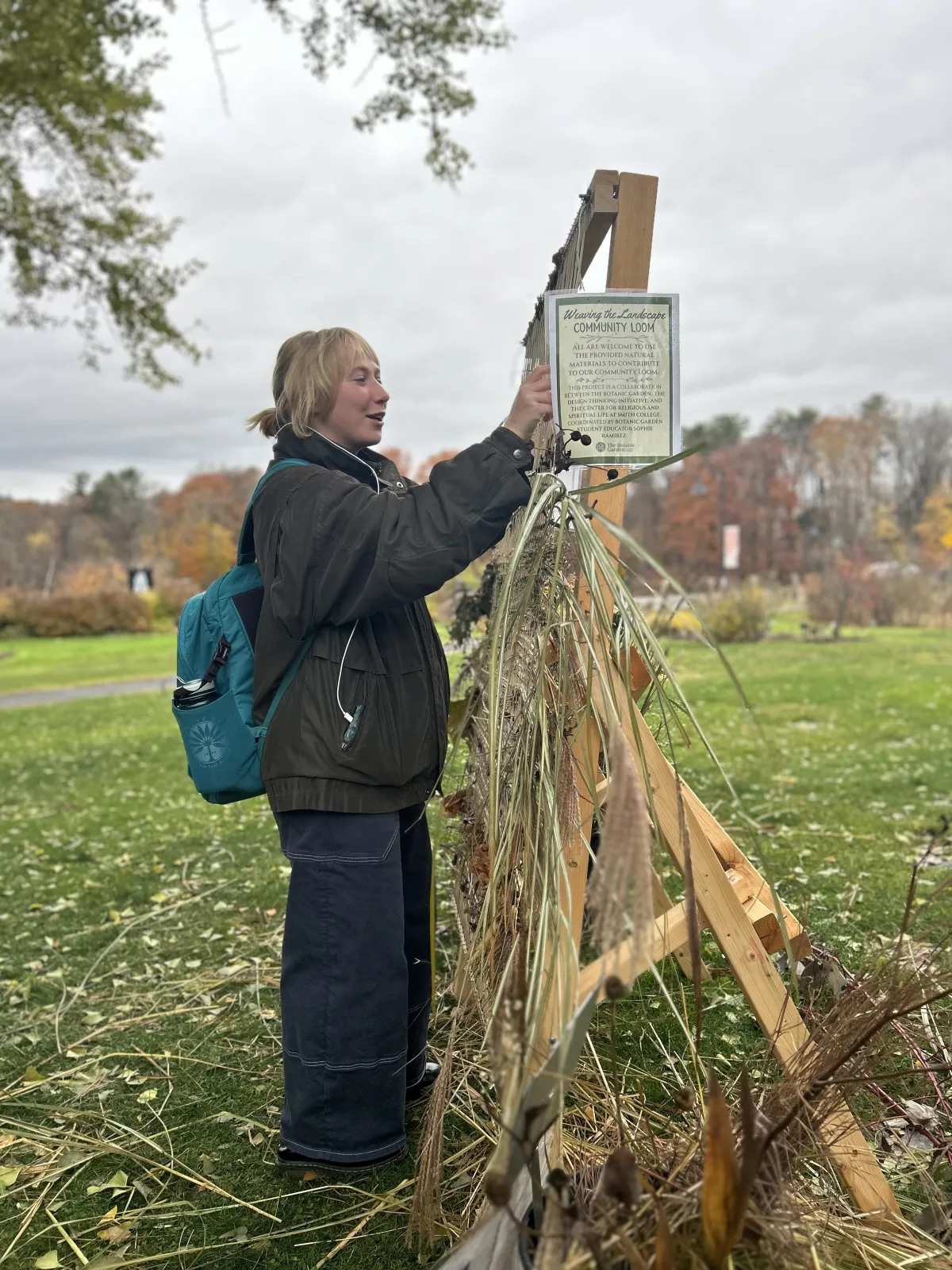
Additionally, they undertook individual projects that explored plants from a host of perspectives. Maria Tejada Gonzalez ’26, with the help of Elio Berkovic ’27, produced a tour highlighting plants native to Massachusetts; Sophie Ramirez ’28 installed a community loom in our Systematics garden and invited visitors to weave a tapestry of natural fibers; Mia Fields Peña ’28 spent the year tending our Learning Garden, including planting garlic, starting seeds, and hosting an Earth Day event; and Grace Harvey ’28 led efforts on our latest exhibition, Plant (R)evolution: Algae to Angiosperms, which will be on display this fall.
As a group, they also supported the curation of Koanbanchinemma (do you see the light (in me)). These are just a few of the projects that showcase the impactful opportunities for both learning and leading that the botanic garden provides our students. The BoGSEs amplify our efforts across both campus and our greater communities and in-turn we offer a uniquely Smith experience in engaging with a public garden.
My time as a BoGSE allowed me to build skills as an educator and pursue my interests by allowing me to facilitate community engagement events and providing the support and framework to build an exhibit that combined my academic interests and educational objectives of the botanic garden. After my year with the program, I feel more confident in my abilities as a facilitator and science educator.

Sustainability Summit
In collaboration with the Center for the Environment, Ecological Design, and Sustainability (CEEDS), the botanic garden hosted the third annual Grounds and Landscaping Sustainability Summit at Smith. Staff from Williams, Middlebury, Hampshire, Mount Holyoke, Holy Cross, Amherst and Wellesley Colleges as well as from UMass Amherst were present for a dynamic day of community building, learning and sharing about the efforts each college is making towards a more sustainable future and building resilient landscapes.
The summit included presentations and panel discussions about the value of accreditation programs such as ArbNet and Tree Campus and how they help build and protect diverse plant collections, strategies and experiences managing aggressive plants, and the importance of understanding conventional nursery propagation and its limitations. There was also a tour of the botanic garden’s propagation nursery which has hit a new stride shifting its focus to growing plants from seed of known origin, and cultivating plants with conservation, ecological and community value. CEEDS Director Beth Hooker also provided an extensive show and tell of the newly installed landscapes that align with the mission set forth by the college’s Landscape Master Plan and which have come on the heels of geothermal and new building construction.
Experiments
Food as Medicine
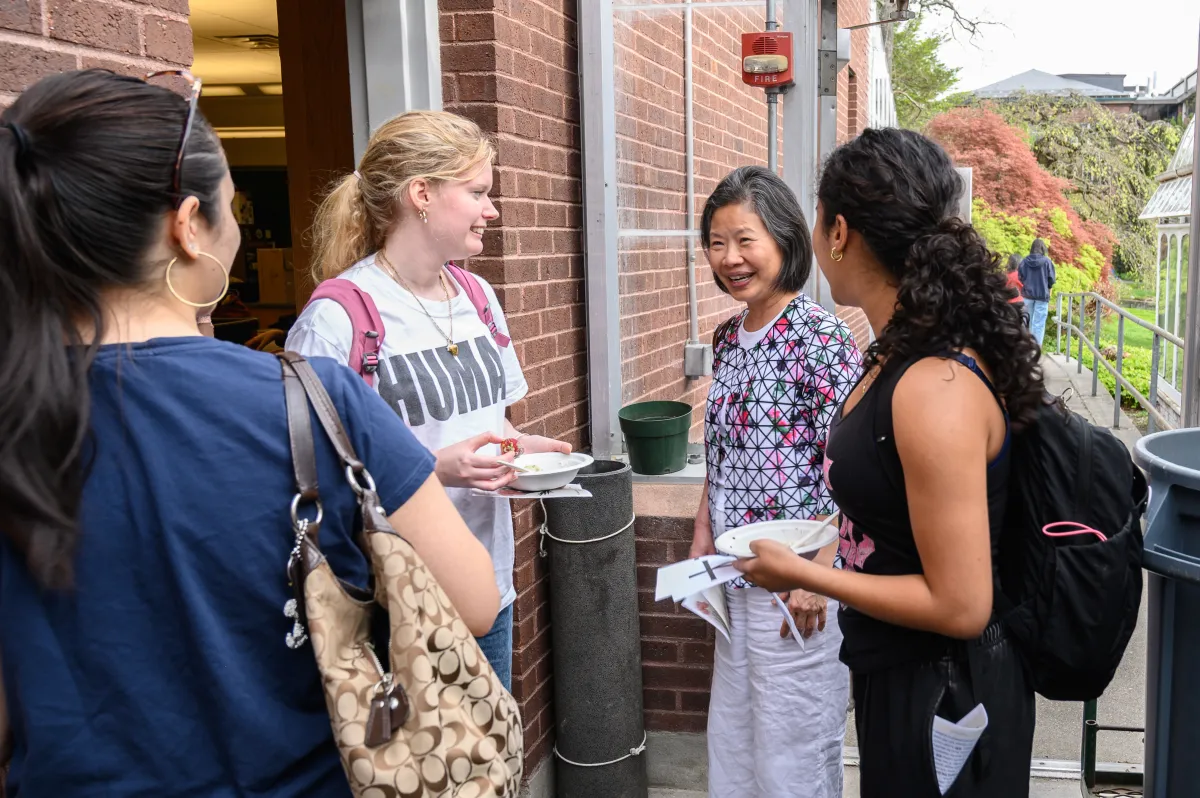
A true experiment in terms of programming at the botanic garden, Food as Medicine was launched as a monthly series embedded within the Late Hours at Lyman for Smithies on Tuesdays. Each Food as Medicine featured a plant (or rather fruit or seed from a plant) that grows in the collection at Lyman and highlighted the important dishes, across the globe, that are made from that plant. Food as Medicine aimed to kindle the relationships between students and the plants they consume that make up staples of cuisines far in distance, but close to their hearts.
In partnership with various student organizations over the course of the year, this program invited students into the garden to share food, engage in reflections on their significance and spend time together in the tranquility of the conservatory. Student organization partners this past year included Pan Asians In Action, Southeast Asian Student Alliance, and the co-op Hopkins House, and as well as the East Asian Languages and Cultures department.
I'm looking forward to continuing to make Food as Medicine a recurring event in which people have awakened in them a sense of what they know inside their bodies… what memories might be evoked whenever one tastes a plant that is familiar to them, but had gotten lost or forgotten—due to markets, movement, forced migration, dispossessions, and cultural displacement.

Students exploring the greenhouse during a Food as Medicine scavenger hunt.

Cover of zine that was created by students for the Food as Medicine rice event.

Page of zine that was created by students for the Food as Medicine rice event.
Conservation Intern leading IUCN Red List Assessment
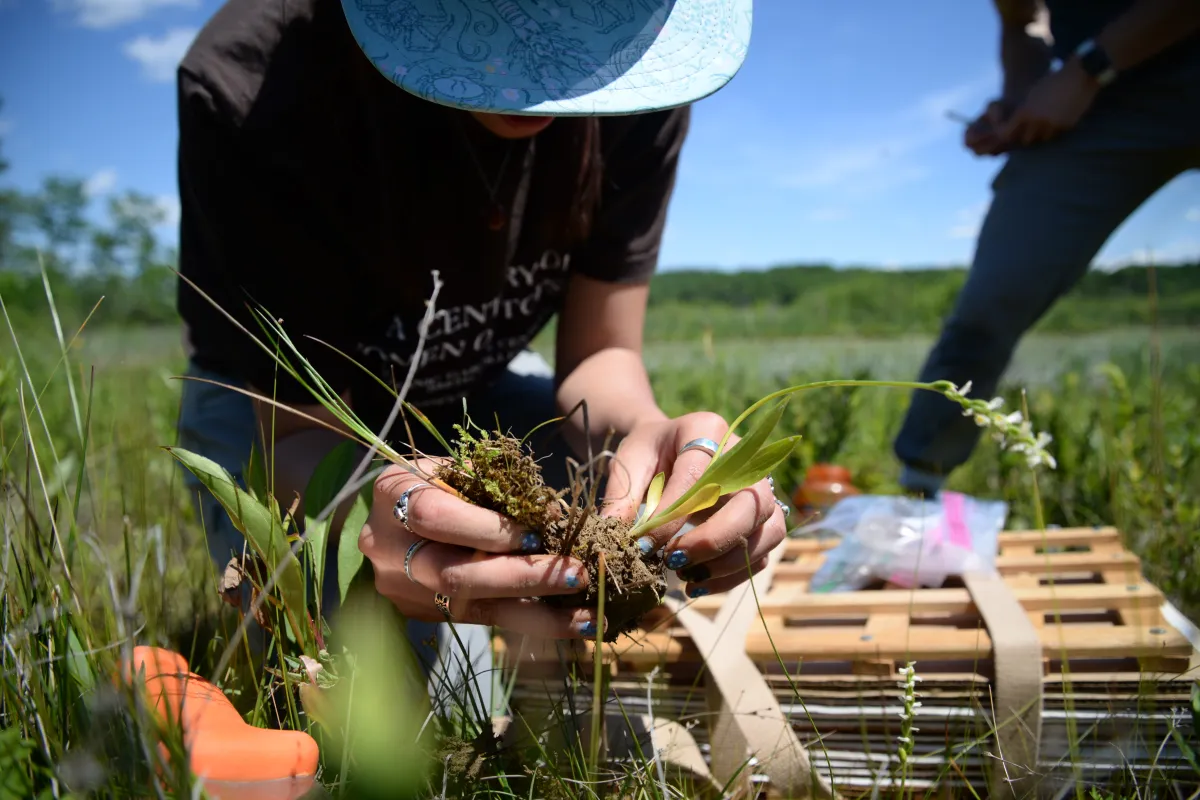
Five years ago, the botanic garden set out to create something unusual: an undergraduate conservation program built not simply around learning concepts or observing, but around meaningful participation in solving real conservation challenges. In just half a decade, that vision has grown into nationally connected conservation work, important scientific partnerships, and life-shaping opportunities for Smith students.
This year, the program reached a new level of impact through collaborations with the White Mountain National Forest, the North American Orchid Conservation Center, and the International Union for Conservation of Nature (IUCN). These partnerships place Smith students at the center of work with implications far beyond campus.
Working alongside scientists from the White Mountain National Forest and the U.S. Department of Agriculture, Smith conservation interns established the first-ever ex-situ conservation collections of Labrador willow (Salix argyrocarpa). These plants originate from a remote population on Mount Washington, New Hampshire, the highest summit in the Northeast, where the species persists as a fragile remnant far from its Arctic home that faces growing pressure from climate change. Today, Smith students are not only stewarding these collections; they are helping secure the species’ future by preparing seed for long-term conservation banking.
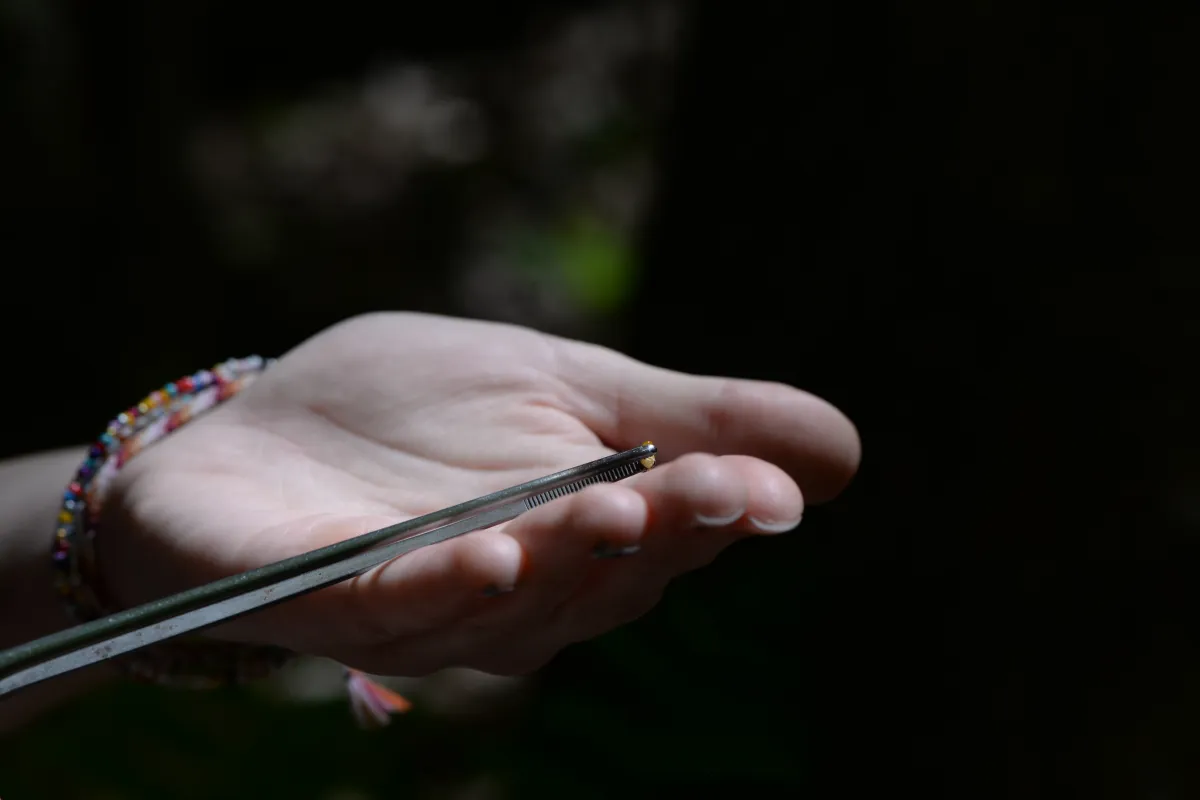
Our new partnership with the North American Orchid Conservation Center is even more ambitious. Together with researchers across the country, Smith students are helping build knowledge needed to protect the 63 orchid species native to the northeast, almost two-thirds of which are threatened with extinction. Undergraduates are conducting conservation work that is rarely available outside graduate programs: collecting for living collections, contributing to regional research efforts, and helping answer urgent questions about how vulnerable species can persist in a changing world.
Perhaps no project better illustrates the power of this model than our work with mountain magnolia (Magnolia fraseri). This year, Dina Alam ’27 synthesized three years of observations and data generated through a Conservation Action Plan co-authored by Smith Botanic Garden interns to produce a revised IUCN Red List assessment for the species. The Red List is the world’s leading measure of extinction risk and serves as a critical tool for conservation decision-making across the globe.
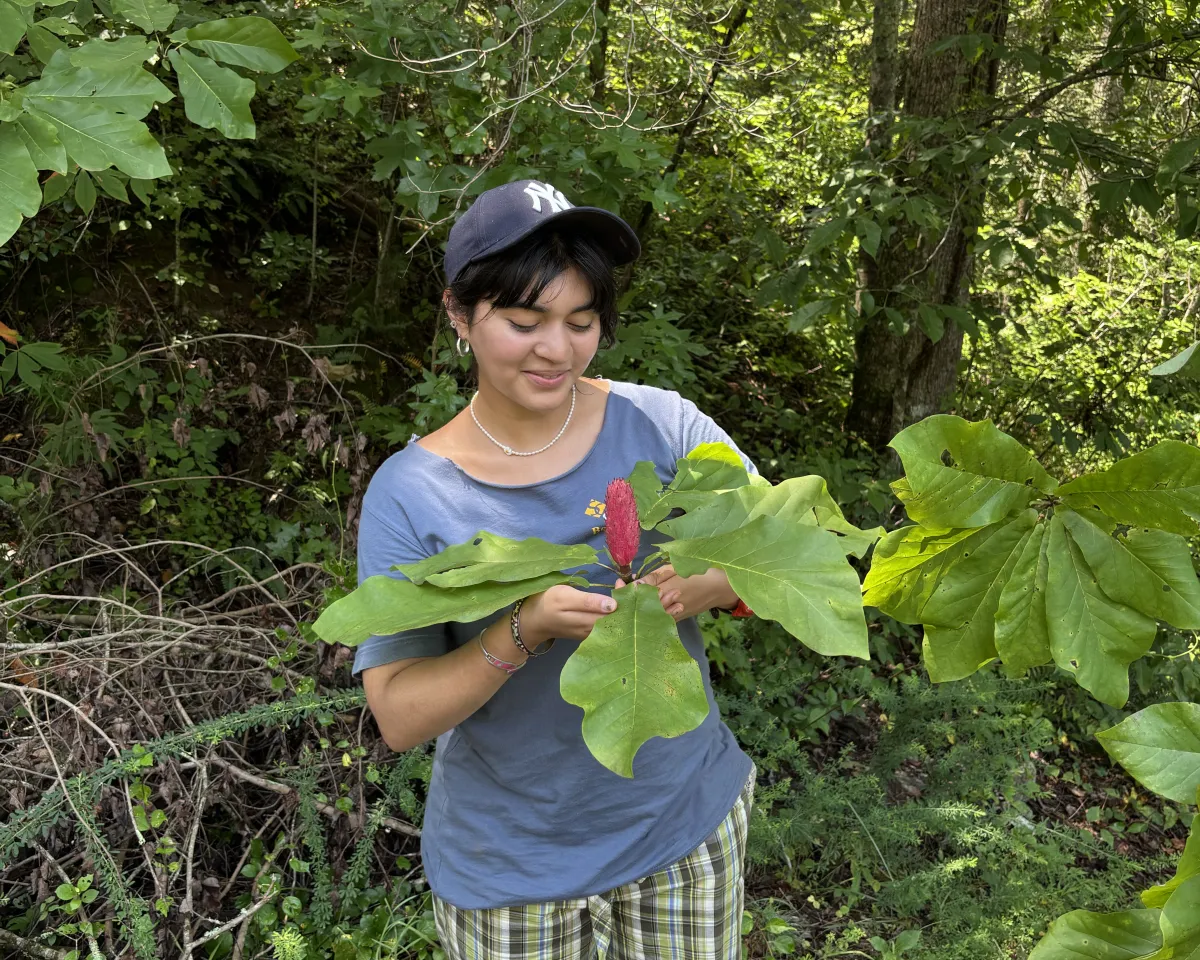
This type of work is typically led by scientists with years, if not decades, of experience. At Smith, an undergraduate did it.
For Dina and for every student on the conservation team, experiences like these do more than build résumés. They reshape what students believe is possible: that as undergraduates they can contribute to international science, influence conservation practice, and begin their careers not by observing change, but by helping create it.


Inclusive Community Building
Keepers of teaching collections around the globe are collectively redefining their work through models that scrutinize past practices and imagine futures that center belonging, justice, and inclusive community building. The Botanic Garden of Smith College is uniquely positioned to lead and has taken a very active and deliberate approach to this work. We do this through thoughtful consideration of how our staff, spaces, and community all work together.
What has resulted is a vibrant and energetic celebration of Smith’s core values. Inviting our community at Smith and beyond to contribute their voices to the things we build—our priorities, our collections, our programming, and more—ensures people see themselves in all we do.
A small lens into this work:
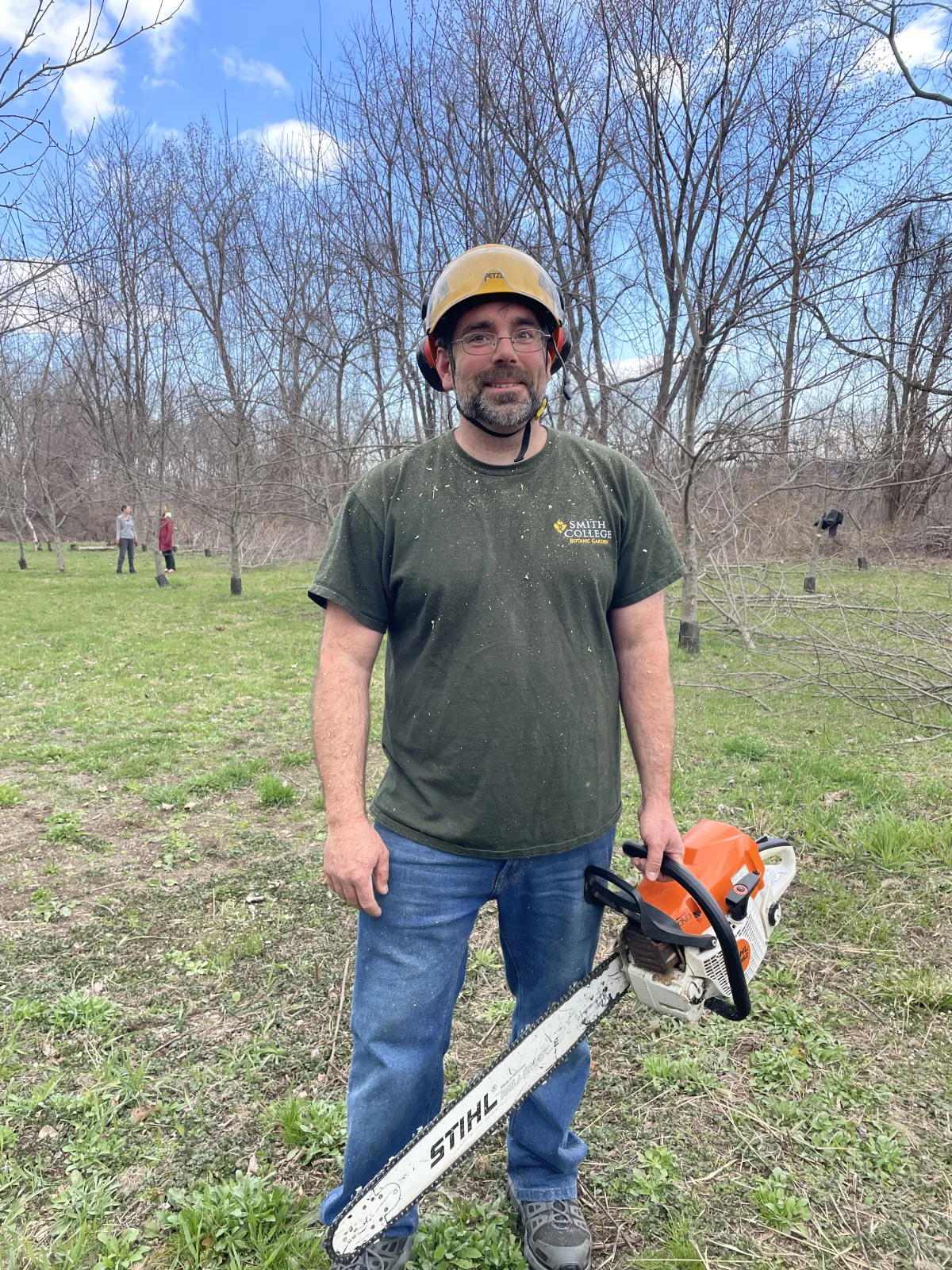
This past year our Chief Arborist Ben Green and Gardener and Assistant Arborist Andrew Rebelo volunteered their skills and labor at Nuestras Raíces and Pequoig Farm, bolstering the important work that these local organizations in our community are doing. Sharing resources and knowledge with historically underserved community partners on and off campus is an important part of our work.
Partnering with local nonprofits and organizations has also been woven into our summer internship curriculum. Interns partook in field trips where they participated in volunteer work days while learning about the work these organizations engage in, such as food justice at Nuestras Raíces, managing community gardens and farms at Grow Food Northampton and learning about Indigenous farming practices at Pequoig Farm.
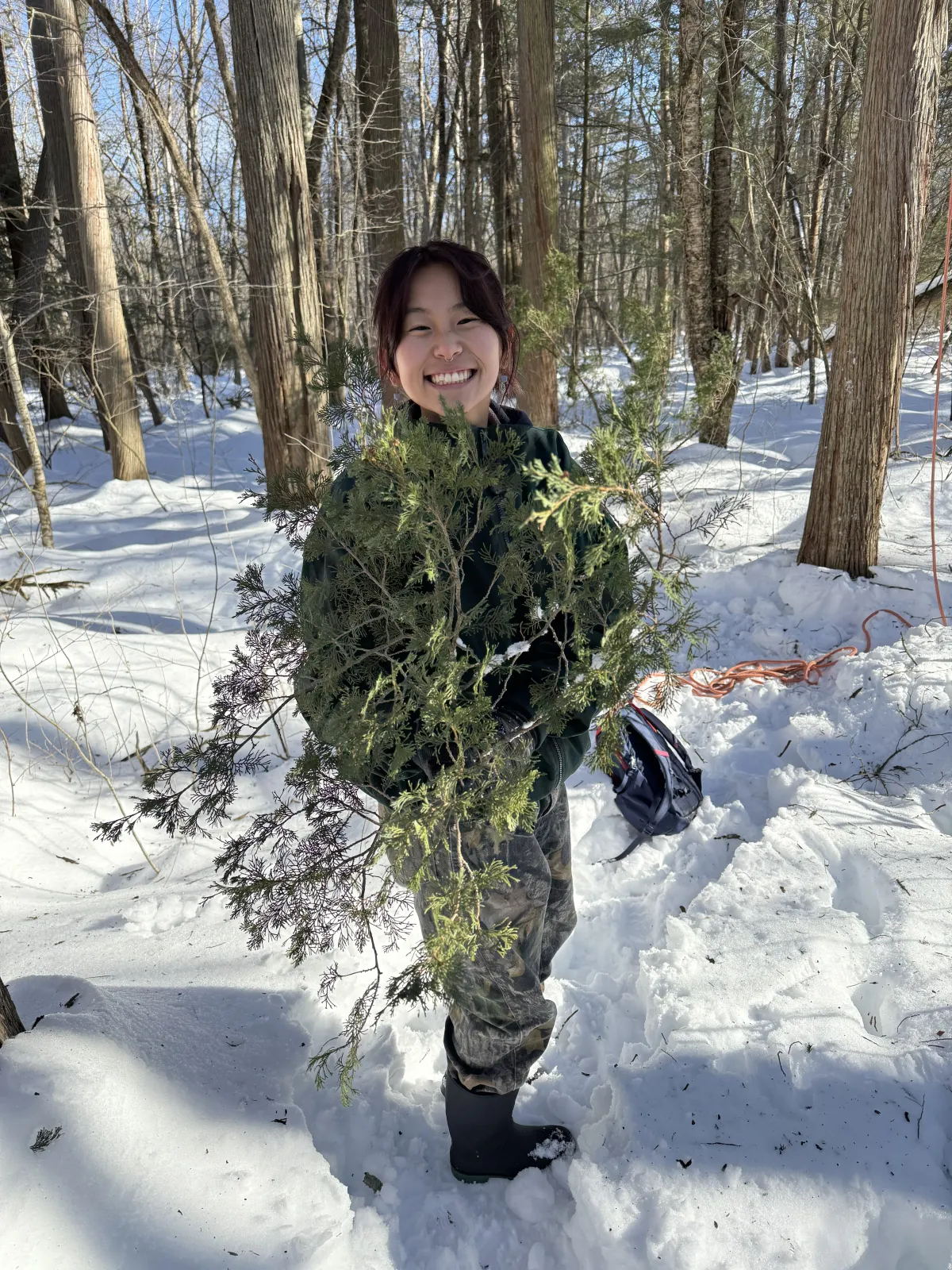
Students played an active role in responsive reciprocity and community building with local Indigenous communities through field outings scouting plants with important cultural significance to these communities. Students learned how to propagate these plants from cuttings from wild populations. The plants are currently being grown out to help to bolster and maintain the populations from which they came in collaboration with members of the Nipmuc community who steward them in their traditional habitats.
Through programming we have been able to regularly partner with student organizations and departments within our Smith community which has allowed us to make the most of an active and deliberate approach to inclusion.

Engagement Highlights
- Hosted garden and arboretum tours for students, their families, alums, botanic garden members, and more
- Facilitated two Smithies at a research-focused summer internship at Royal Botanic Gardens, Kew in England
- Connected Smithies to some of the worlds most active and impactful conservation organizations around the nation and beyond as they participate in, and help share real-world plant conservation initiatives
- Expanded native plant conservation collections through the Global Conservation Consortium for Magnolia, the Global Conservation Consortium for Oak, and Native Plant Trust
- Joined the North American Orchid Conservation Center as a collaborating partner
- Worked with (and continue to work with) local Indigenous groups to support access to wild-sourced, culturally important plants
- Co-hosted the Grounds and Landscape Sustainability summit, welcoming teams from New England, in collaboration with CEEDS
- Offered popular J-term class connecting the art of paper making to the botanical world taught by botanic garden staff
- Created student opportunities for leadership in education and program building at the botanic garden
- Collaborated with student clubs and Smith centers for Smith Arts Day
- Led weekly discussion groups for student plant enthusiasts during the academic year
44
student opportunities to join our team as co-workers, educators, researchers and interns
1054
students in 66 classes representing 28 departments worked directly with our staff and collections through course-based and research-driven experiences
1,771
visitors engaged in botanic garden tours, including visits from 34 area K-12 schools
38
orders of wild-collected seed distributed to botanical institutions in 14 countries through Index Seminum

Looking Ahead
Compass 2035 sets an ambitious course for Smith’s next decade, centered on four interconnected goals: advancing academic excellence, exploration, and discovery; preparing students for meaningful careers and lifelong leadership; fostering well-being, belonging, and resilience; and strengthening institutional sustainability so the college’s contributions endure for generations.
The botanic garden’s work in FY25–26 reflects these priorities in tangible and distinctive ways. Here, Smith students engage in learning opportunities they simply can’t find elsewhere: conducting conservation work with real consequences, contributing to the protection of plant communities threatened by climate change, and participating in land stewardship shaped by Indigenous knowledge and leadership. They are asked not only to study urgent environmental challenges, but to respond to them with curiosity, creativity, responsibility, and their own voices. In doing so, they help shape conversations that extend beyond Smith and inform how the global botanic garden community addresses complex ecological and social questions.
In the year ahead, the botanic garden will begin its own strategic planning process to align more fully with the vision outlined in Compass 2035. That process will help define a botanic garden whose significance rests not only in the breadth and depth of its collections, but in the learning it makes possible, the relationships it cultivates, and the impact it has on students, communities, and the wider world.